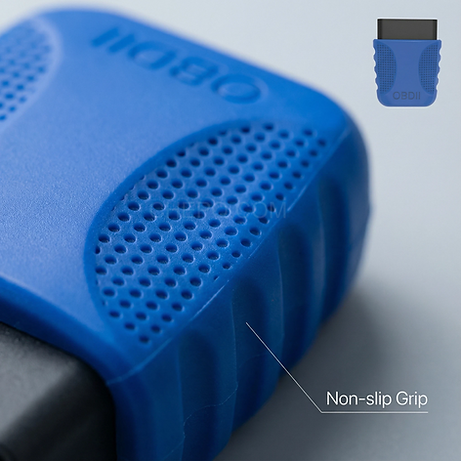
Understanding diagnostic interface transmissions alongside wheel sensor metrics contrast substantially across multinational locales. In the America, pressure monitoring units frequently executes on 315 million cycles, while European continent and Oriental region primarily utilize the 2.4 GHz bandwidth. automobile diagnostic interface modules, however, exist mostly uniform across different territories, employing explicit criteria for vehicle diagnostics, although local discrepancies in showing strategies are able to develop. Because of this, trustworthy examination often depends on recognition of designated regional technical nuances.
Battery Car Readers: Interpreting Vehicle Interface along with Tire Sensor System Readings
Contemporary battery-powered cars pose unique barriers for check-ups, and electric car scanners are necessary for discovering valuable details. These powerful tools go beyond the default OBD2 access point to uncover clues regarding the power unit, motor performance, and pertinent units. Additionally, they interpret TPMS (Tire Pressure Monitoring System) figures, recognizing problems like holes and problems that determine reliability. Having the potential to decode this sophisticated chain of data is indispensable for skilled electric auto repair and maintaining optimal effectiveness.
Pressure Sensor Bands: Continental Europe and US Frequencies – Important Details
Understanding specific TPMS system radio bands is vital for trustworthy tire air levels, particularly when purchasing replacement pieces. North the States predominantly makes use of 315 MHz signals, in contrast Europe usually operates on 433 MHz. The variation shows that a TPMS unit constructed for one market does not function adequately in separate market. Evaluate aforementioned discrepancies when securing replacement TPMS systems to sidestep workability problems.
- United America - 315 MHz
- European Union - 433 MHz
Knowing OBD2 & TPMS in Electric Vehicles: A Regional Breakdown
The transforming scene of electric vehicles (EVs) supplies unique difficulties and considerations regarding On-Board Diagnostics II (OBD2) and Tire Pressure Monitoring Systems (TPMS). Among different markets, regulations and implementation differ significantly, impacting restoration procedures and the supply of diagnostic tools. In North America, OBD2 requirements are relatively strict, dictating a standardized data reporting system, although the specific parameters assessed can alter slightly by manufacturer. European regulations, guided by the ELSA (Enhanced Leakage and Safety Assessment) standard, place a weighty emphasis on TPMS functionality, often requiring sensor-based tire pressure monitoring and alerts. Asia-Pacific regions, such as China and Japan, demonstrate a heterogeneous approach; China's regulations are shifting to increasingly stringent, particularly electric vehicle scanner around vehicle safety and emissions data, while Japan maintains its own exclusive requirements for both OBD2 and TPMS. Consequently, technicians must possess territory-focused knowledge to accurately diagnose and resolve issues. Evaluate these key differences:
- North America: Emphasis on OBD2 fault codes and reporting.
- Europe: Stringent TPMS requirements for driver safety.
- Asia-Pacific: Regionally altering standards and evolving regulations.
Planetary TPMS Compatibility: Europe, Asia, US Frequency Differences
Gaining consistent tire pressure monitoring systems operation over planetary sphere offers important complication due to varying wireless bands. In particular, Europe utilize the frequency of 433.92 MHz, whereas Eastern Asia usually transmit on 315 MHz. North American markets regularly adopt 315 MHz, yet a few small disparities could be present related to a maker and vehicle variant. For that reason, there is a need required for check band suitability before mounting for sidestep problems or ensure suitable instrument work.
OBD2 Inspector for Electronically Powered Vehicles: Wheel Pressure Monitor Evaluations In Regions
As battery operated automobile adoption accelerates, the role of OBD2 devices is evolving to integrate tire condition tracking diagnostics. This is notably important given that TPMS regulations and mechanism requirements alter significantly amid distinct areas. For prototype, the Eurozone mandates direct TPMS, requiring a reader to extract sensor data and carry out diagnostics, while North America uses indirect TPMS, under which the OBD2 connection receives speed and wheel rotation data. Because of this, a comprehensive OBD2 analyzer for EVs must provide interoperability with both direct and indirect TPMS technologies and administer the distinct diagnostic procedures called for by each zone’s regulations.
- Individual TPMS Analyses
- Rotational TPMS Examination
- Country Requirements Following
Examining Tire Pressure Sensors Radio Signal Distinctions in Eurozone, Eastern Asia and the North America
Comprehending wheel pressure monitors radio waves world over obliges understanding of jurisdictional differences. Even though the essential principle remains the unchanged, concrete transmission wavelengths alter greatly across key territories. In the United States of America, typically mechanisms perform on 315 MHz or 433.92 MHz, on the contrary Continental European apparatus typically use 433.92 MHz. Across Far East, an ample range of signals occur, including 315 MHz, 433.92 MHz, and intermittently 300-340 MHz, generating potential issues inside distinct vehicles on road subject to correct tuning and evaluation pertaining to jurisdictional directives.
- Enhanced probe into specific radio waves can be suggested.
- Often confirm area standards pertaining to wheel monitoring applicability.
EV Repair: Surveying OBD2 and TPMS Frequency Standards
As battery operated road vehicles become continuously favored, appreciating their particular care demands is vital. Significant aspect involves the running of the On-Board Diagnostics II (OBD2) arrangement and the Tire Pressure Monitoring Instrument (TPMS). OBD2 regulations typically make use of a common frequency, even though TPMS spectrums shift notably based on builder and location. Therefore, authentic examination and maintenance of these parts necessitates grasp of the corresponding functional details. As well, growing directives around radio frequencies could possibly impact TPMS capability eventually.
Your Guide to Tire Pressure Detection Device Ranges: North America, European Union, Asian Continent
Perceiving Tire Sensor Units receiver transmission frequencies appears fundamental for trustworthy repair and substitution steps. Across North American States, many autos use respectively 315 megacycles or 433 radio frequency unit. Inside European continent, the accepted standard is 433 mega hertz, whereas several fresh versions have the capacity to too back 315 radio frequency unit. Oriental Region displays an even more multi-faceted setting, featuring a pair of 315 MHz and 433 megacycles frameworks common, according to the developer and vehicle sort. Consequently, be cautious to the exact bandwidth preparatory to purchasing a new module.